
Founding and CSR support
Help move Phase 1 from design into procurement, commissioning and early operation, with structured progress reporting.
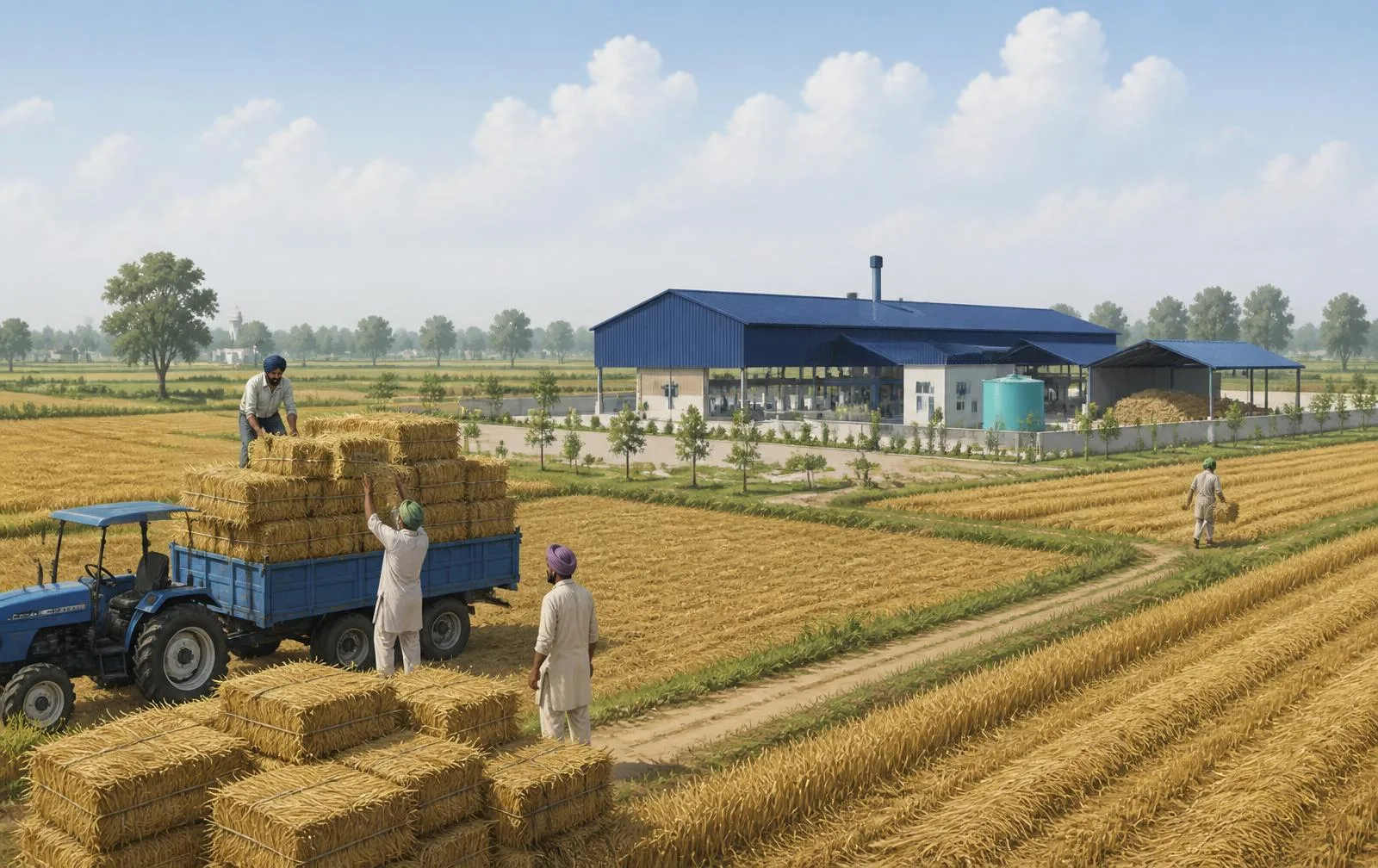
Idea and design stage · seeking founding partners
A proposed 5 tonne-per-day facility in Patiala district, designed to turn paddy straw into biochar instead of smoke.
Concept illustration — not an operating Bright Pines facility.
Why this matters
After the paddy harvest, farmers have a short period before wheat sowing. Removing straw costs time and money; burning clears a field quickly.
A useful alternative must work inside that window. It needs dependable collection, a nearby destination and an operating model that treats crop residue as an input rather than a burden.
The proposed Bright Pines facility begins with that practical constraint: receive and weigh straw locally, convert it under controlled conditions, and retain evidence for every batch.
Proposed system
The project connects collection, conversion, useful outputs and records. Each step must work for the others to work.
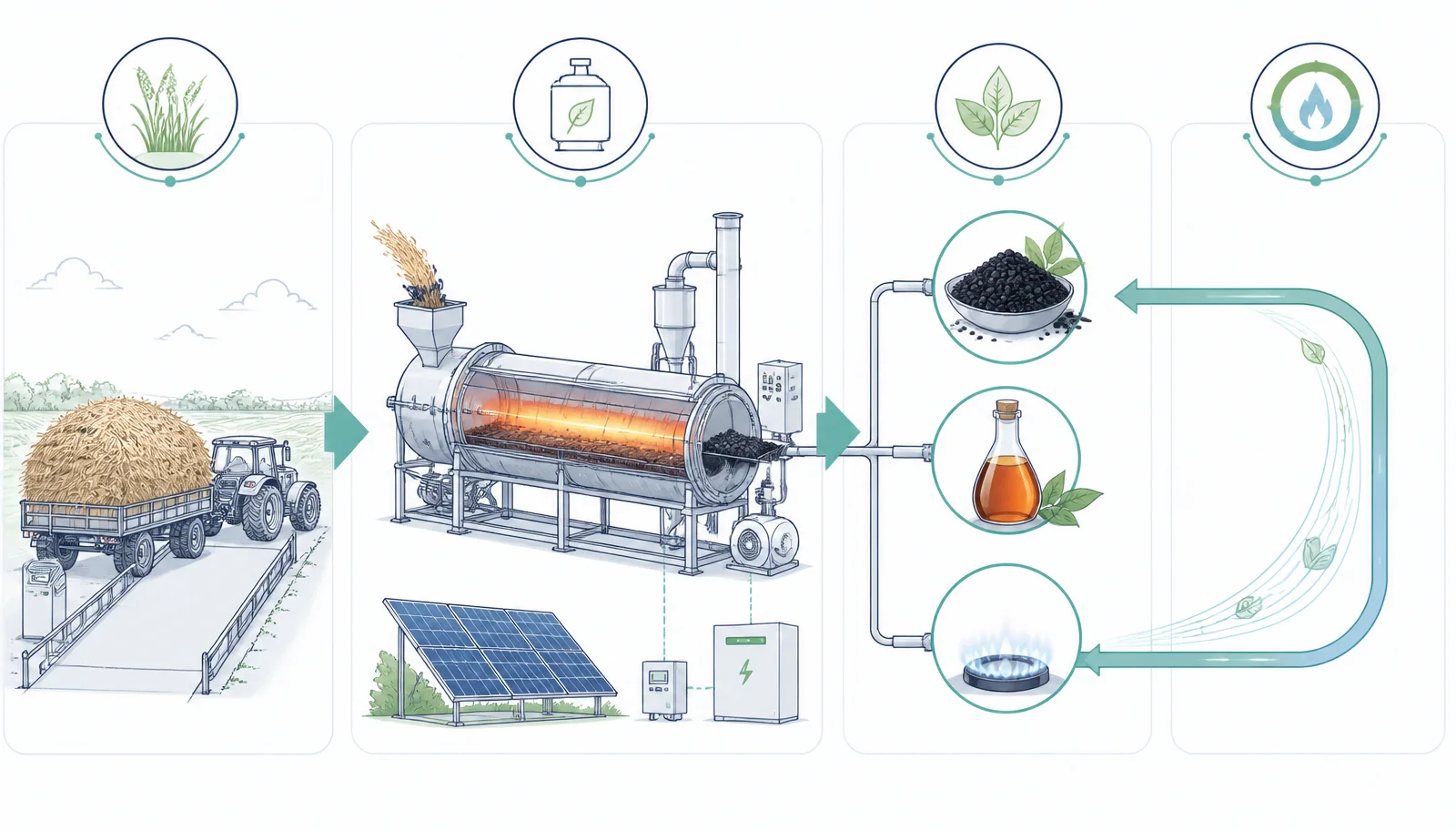
Step 1
Paddy straw would be collected from nearby villages, weighed at the site and recorded by source.
Step 2
Continuous pyrolysis would heat the residue with limited oxygen under recorded operating conditions.
Step 3
The process produces biochar and wood vinegar, while syngas returns to help fuel the reactor.
Step 4
Feedstock, process conditions and batch tests would create the evidence trail needed for independent review.
Intended value
A dependable destination for paddy straw during the field-clearing period and a potential soil input for agricultural use.
Convert biomass into a stable carbon-rich material and develop the records needed to evaluate its climate contribution.
As a non-profit initiative, any future surplus would be reinvested in capacity and Bright Pines' education and community programmes.
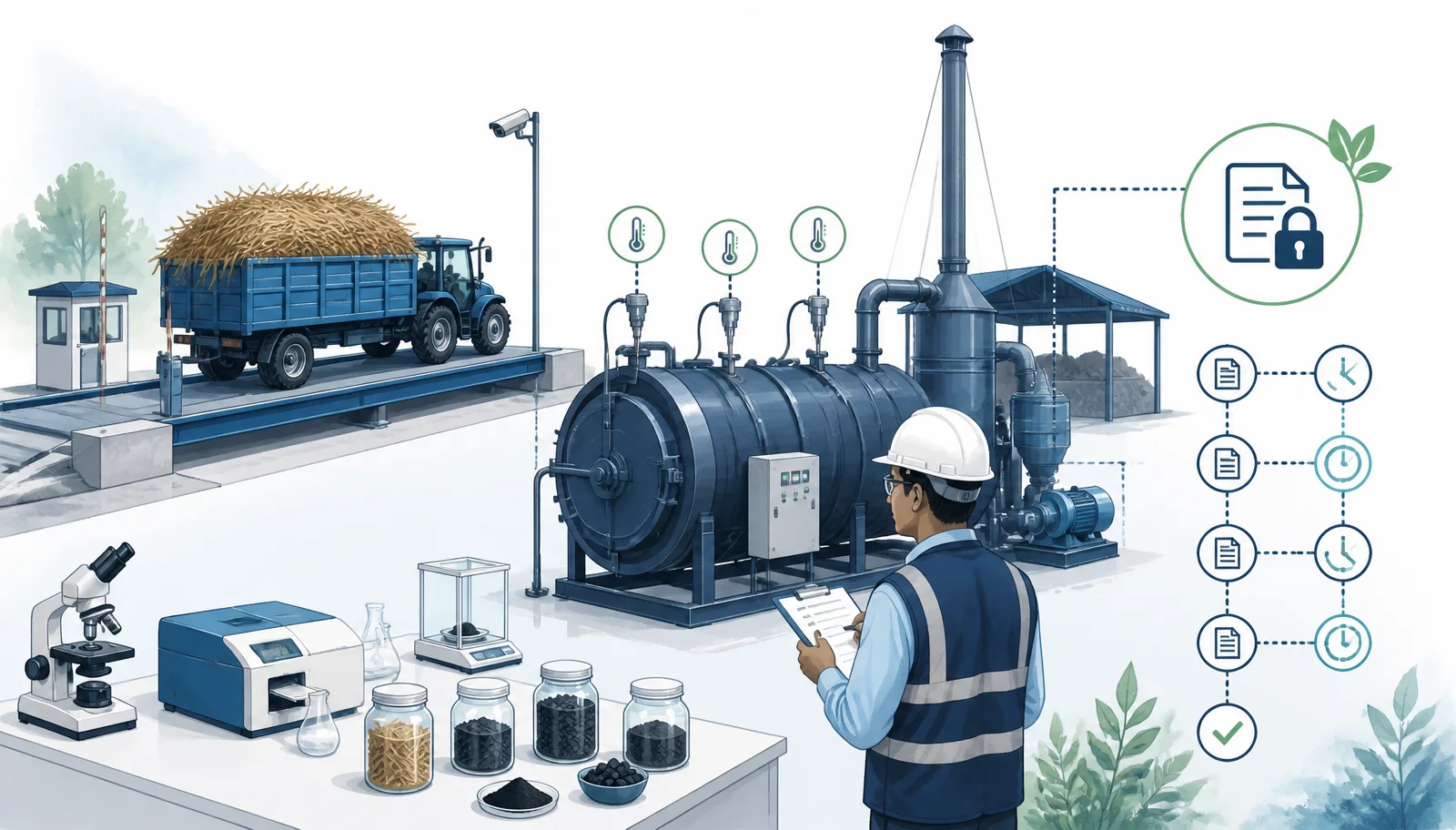
Measurement from day one
The project is intended to work toward recognised registry requirements. It is not yet registered or certified.
Final site, equipment selection, collection radius, laboratory partner, registry or methodology, capital requirement, commissioning dates, biochar yield, annual carbon-removal estimate and buyer arrangements. We will publish these only when supported by project documentation.
Partnership routes
A useful partnership has a defined role, evidence of progress and an honest account of what has not yet been achieved.
Help move Phase 1 from design into procurement, commissioning and early operation, with structured progress reporting.
Support process design, agronomic trials, product testing or independent learning around the proposed model.
Help shape a credible data protocol and future certification pathway before operations begin.
Explore feedstock collection, transport, future biochar use, wood-vinegar demand or responsible offtake conversations.
A defined scope, structured progress updates, access to supporting project evidence and, where appropriate, participation in an auditable India-based case study.
Carbon credits, financial returns, certification or environmental claims before the facility, method and evidence have been independently established.
If your organisation works in CSR, ESG, climate finance, agricultural research, carbon measurement or biomass systems, we can share the current project brief and discuss a defined role.